Loading article formatting. You can read the text below while it loads.
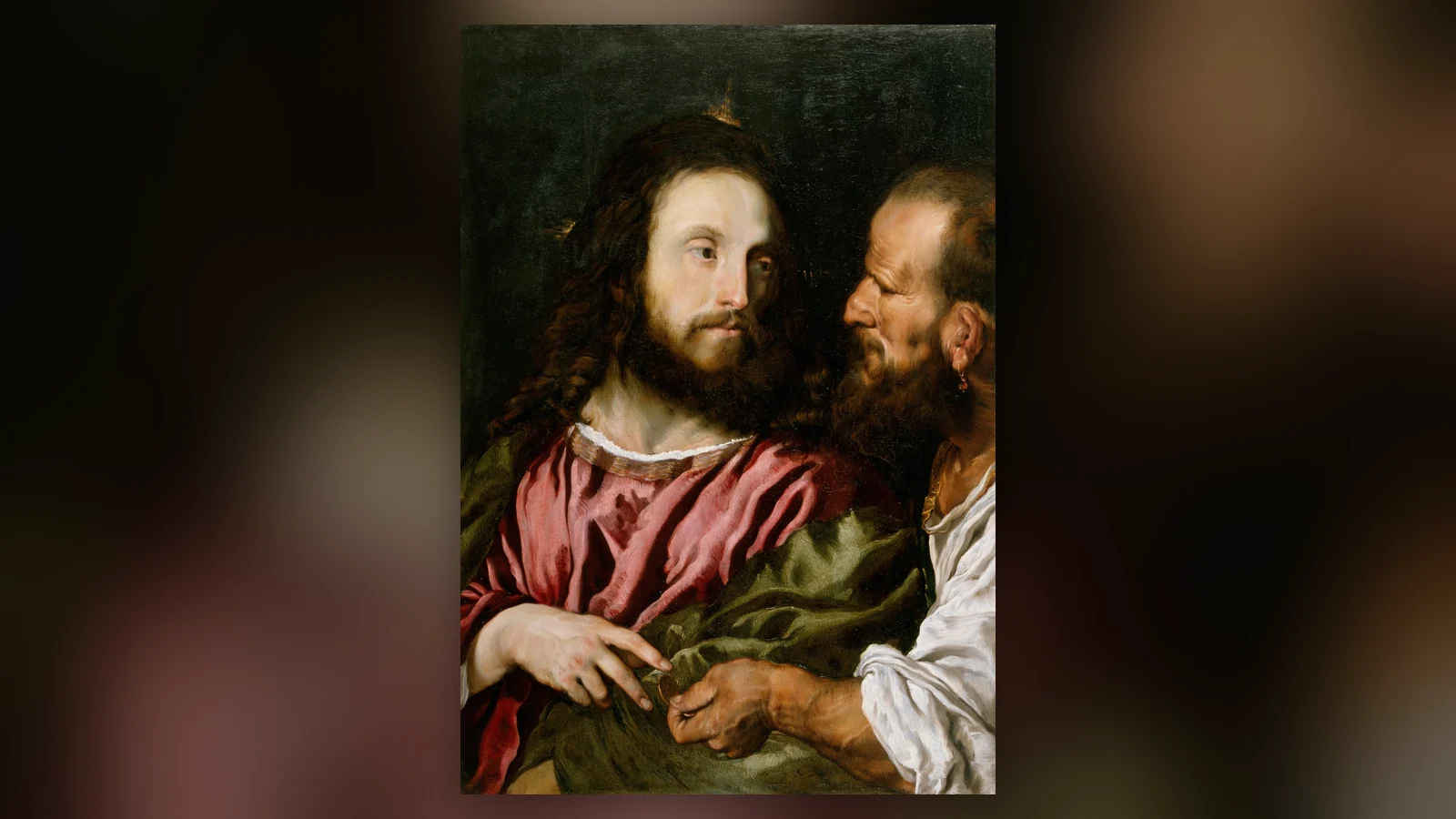
A reflection on the daily Mass readings for October 18, 2026 Sunday Mass ends, you reach for your phone, and the week is already waiting. There’s a bill to pay, a work message to answer, and someone who needs a ride. Where does everything you’ve just prayed fit into all of that? It’s easy to give God a place in the schedule while leaving the rest of our decisions untouched. We can be sincere at Mass and still have parts of life where we’d rather he didn’t ask too many questions. Today’s Gospel brings that tension into focus through a question about money. Look Beyond the Coin The Pharisees’ disciples and the Herodians ask Jesus whether paying the census tax to Caesar is lawful. They’re trying to trap him. Jesus asks to see the coin, points to its image and inscription, and answers: “Then repay to Caesar what belongs to Caesar and to God what belongs to God.” We might hear that and start sorting things into piles: taxes over here, religion over there. But what belongs to God? In a homily on this Gospel, Pope Benedict XVI recalled the Church Fathers’ reading of the image on the coin. Caesar’s image points to a civic obligation; the image of God in every human being points to something deeper. Our very lives belong to God. That includes the person paying the bill, answering the message, and giving the ride. Faith has something to say about how we do each of those things. Give God the decision you were about to make without him. Take Your Responsibilities Seriously Belonging to God doesn’t excuse us from ordinary obligations. The Catechism teaches that citizens have responsibilities toward the common good, including paying taxes and participating in civic life. It also teaches that we must refuse directives that contradict the moral order, fundamental human rights, or the Gospel (CCC 2239-2242). So this passage asks more of us than finding a religious reason to agree with people we already like. It asks us to let God shape our conscience, including when his teaching challenges our loyalties or costs us something. That can get uncomfortable in very ordinary ways. You notice an error in your favor on an invoice. A conversation turns cruel toward someone who isn’t there. A headline fits your opinion perfectly, and you’re ready to share it without checking whether it’s true. Those are places to practice faithfulness. Correct the bill. Refuse the cruel remark. Check the claim before passing it along. Loving God involves the choices that are easiest to make on autopilot. Bring One Decision to Prayer Before the day is over, choose one responsibility you’ve been keeping separate from your faith. It might involve money, work, a public issue, or the way you speak to someone at home. Spend a few quiet minutes asking what faithfulness requires there. If you’re unsure, look to the Scriptures, Church teaching, a trusted friend, or spouse for help. Then take one concrete step: correct what’s dishonest, make the apology, or follow through on the good you’ve been putting off. A Prayer for Today Lord Jesus, I belong to you. Show me where I’ve kept you at a distance. Form my conscience, forgive my sins, and give me the grace to fulfill my responsibilities with honesty and love. Help me recognize your image in the people I meet and take the next faithful step today. Amen. Scripture and References Readings: Isaiah 45:1, 4-6; Psalm 96:1, 3, 4-5, 7-8, 9-10; 1 Thessalonians 1:1-5b; Matthew 22:15-21. Read the October 18, 2026 Mass readings at USCCB. Catechism of the Catholic Church, 2239-2242: responsibilities of citizens and the limits of obedience. Catechism of the Catholic Church, 1701-1709: the image of God and life in Christ. Benedict XVI, homily for the New Evangelization, October 16, 2011. The discussion of Caesar’s coin and the divine image above is a paraphrase. Artwork: Domenico Fetti, copy after Titian, Christ and the Tribute Money, ca. 1618–1620. The Walters Art Museum. Acquired by Henry Walters with the Massarenti Collection, 1902. CC0.
Loading article formatting. You can read the text below while it loads.
A reflection on the daily Mass readings for October 18, 2026 Sunday Mass ends, you reach for your phone, and the week is already waiting. There’s a bill to pay, a work message to answer, and someone who needs a ride. Where does everything you’ve just prayed fit into all of that? It’s easy to give God a place in the schedule while leaving the rest of our decisions untouched. We can be sincere at Mass and still have parts of life where we’d rather he didn’t ask too many questions. Today’s Gospel brings that tension into focus through a question about money. Look Beyond the Coin The Pharisees’ disciples and the Herodians ask Jesus whether paying the census tax to Caesar is lawful. They’re trying to trap him. Jesus asks to see the coin, points to its image and inscription, and answers: “Then repay to Caesar what belongs to Caesar and to God what belongs to God.” We might hear that and start sorting things into piles: taxes over here, religion over there. But what belongs to God? In a homily on this Gospel, Pope Benedict XVI recalled the Church Fathers’ reading of the image on the coin. Caesar’s image points to a civic obligation; the image of God in every human being points to something deeper. Our very lives belong to God. That includes the person paying the bill, answering the message, and giving the ride. Faith has something to say about how we do each of those things. Give God the decision you were about to make without him. Take Your Responsibilities Seriously Belonging to God doesn’t excuse us from ordinary obligations. The Catechism teaches that citizens have responsibilities toward the common good, including paying taxes and participating in civic life. It also teaches that we must refuse directives that contradict the moral order, fundamental human rights, or the Gospel (CCC 2239-2242). So this passage asks more of us than finding a religious reason to agree with people we already like. It asks us to let God shape our conscience, including when his teaching challenges our loyalties or costs us something. That can get uncomfortable in very ordinary ways. You notice an error in your favor on an invoice. A conversation turns cruel toward someone who isn’t there. A headline fits your opinion perfectly, and you’re ready to share it without checking whether it’s true. Those are places to practice faithfulness. Correct the bill. Refuse the cruel remark. Check the claim before passing it along. Loving God involves the choices that are easiest to make on autopilot. Bring One Decision to Prayer Before the day is over, choose one responsibility you’ve been keeping separate from your faith. It might involve money, work, a public issue, or the way you speak to someone at home. Spend a few quiet minutes asking what faithfulness requires there. If you’re unsure, look to the Scriptures, Church teaching, a trusted friend, or spouse for help. Then take one concrete step: correct what’s dishonest, make the apology, or follow through on the good you’ve been putting off. A Prayer for Today Lord Jesus, I belong to you. Show me where I’ve kept you at a distance. Form my conscience, forgive my sins, and give me the grace to fulfill my responsibilities with honesty and love. Help me recognize your image in the people I meet and take the next faithful step today. Amen. Scripture and References Readings: Isaiah 45:1, 4-6; Psalm 96:1, 3, 4-5, 7-8, 9-10; 1 Thessalonians 1:1-5b; Matthew 22:15-21. Read the October 18, 2026 Mass readings at USCCB. Catechism of the Catholic Church, 2239-2242: responsibilities of citizens and the limits of obedience. Catechism of the Catholic Church, 1701-1709: the image of God and life in Christ. Benedict XVI, homily for the New Evangelization, October 16, 2011. The discussion of Caesar’s coin and the divine image above is a paraphrase. Artwork: Domenico Fetti, copy after Titian, Christ and the Tribute Money, ca. 1618–1620. The Walters Art Museum. Acquired by Henry Walters with the Massarenti Collection, 1902. CC0.